
The Filmmaking Tripod to Beat in 2025.
Aktiv6 Fluid Head
Sachler Flowtech75
Sirui SVH-15 Fluid Head
The best head for the Sachler Flowtech might not be the Aktiv6.
After my failed acquisition of the Tribex, I knew that having a good tripod head was crucial. Although the Aktiv6 head is optimized for the Flowtech, there are some aspects that are not even as good as the Sirui SVH15 despite being 5 times more expensive. If you’re looking for enough value to justify a Sachler purchase, this might be it.
Sachler Flowtech75
I think you can honestly get away with a good head and a mediocre set of sticks, but I was able to get an incredible deal on the Flowtech legs so I went for it. The legs are carbon fiber, though still much better feeling than the Blackmagic pocket cameras. They can definitely get scratched and dented, so you have to carefully maintain them if you want to preserve their condition. They are the perfect balance of lightweight and sturdy and should be up to the task for the heaviest rigs. What’s great about the sticks is that they are very compact especially with the magnets, which keep the legs together when traveling and is more appreciated than you’d initially imagine. However, they can be hard to open sometimes without the mid level spreader assistance. The feet are also super flexible held together by rubber, but are still reliably sturdy. They’re so easy to take off and put on and allow weird angles and positioning. The best feet of any tripod, Tarantino would be proud.
Handle is super comfortable and necessary for adjusting height and transporting the tripod. The legs are everything you could dream of.
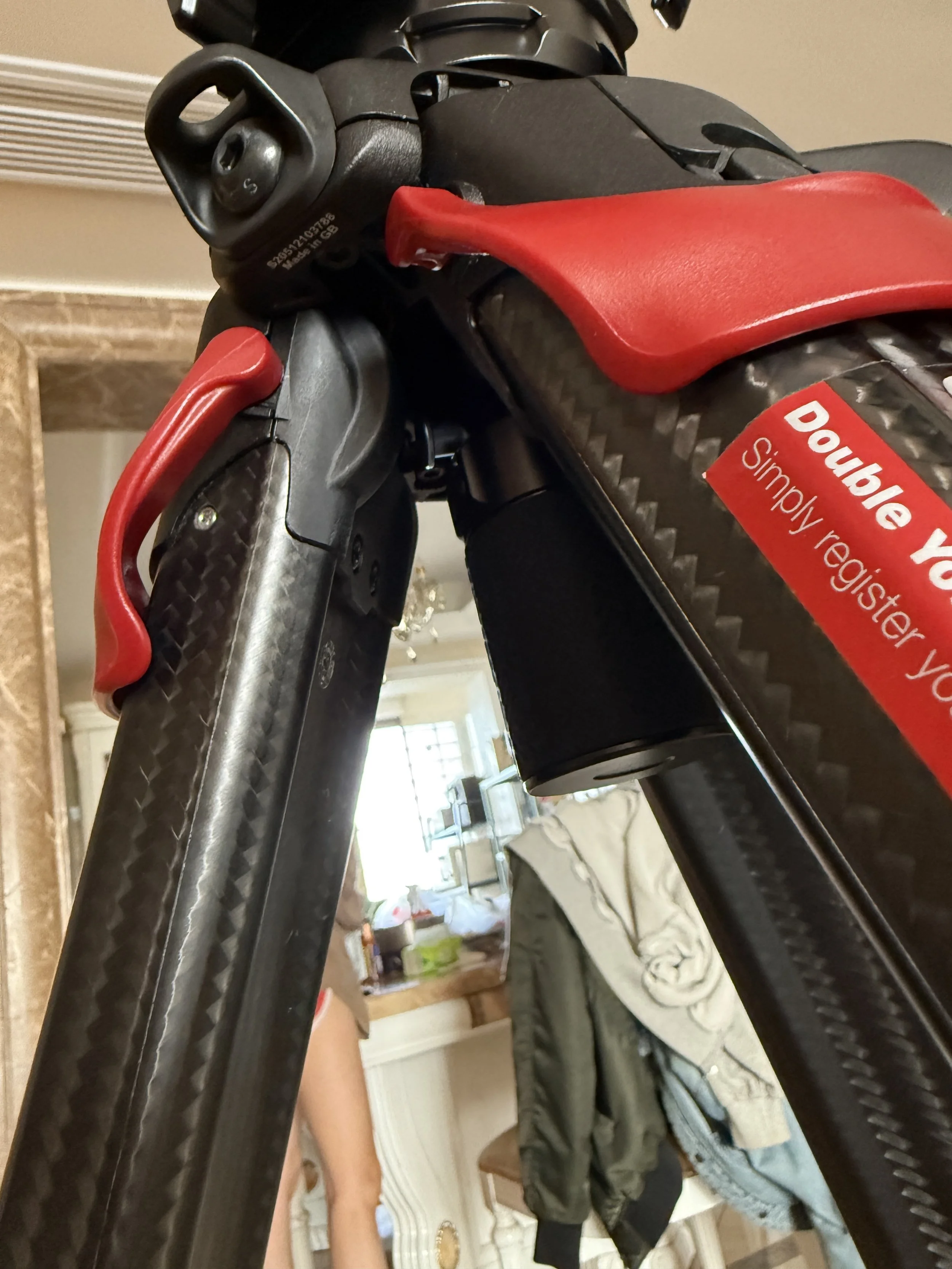
The problem with this combo is that there’s a blue button on the handle that makes contact with the inner legs so you have to be careful when twisting it. You basically have to make the bowl leveled up straight.
There are several handles. This one has a rubber cover.
The feet have maximum flexibility while being reliable.
What I’m not a big fan of is lowering the tripod, which has a lot of friction going down. This is true with any tripod, but because of the brakes and wider surface area of each leg, it seems as though it will wear away at the durability more quickly in the long term. My copy is used, so the legs seem more rattly than usual, time will tell. You kind of have to either shimmy the legs around to go down and grind away at the legs or do things the proper way: close the legs and make them vertical before descending, which I doubt I’ll have the patience for. There’s also a method to lift up to go down, which I think could work. Another aspect is that a mid level spreader is nearly necessary for this tripod because the legs annoyingly slip more than you’d like just moving about. This adds about 1 pound to the weight of the legs and is an accessory I didn’t want to pay for, but it does save you from readjusting the legs when positioning the camera. Although I’m probably a bigger weakling than you, if you have a heavier rig it can be cumbersome to adjust the height the moment you unlock the legs because you have to support the weight before leveling and locking 3 legs. You’re supporting the weight with one arm while locking and adjusting the legs with the other and it takes considerable strength to do this without allowing the original position to shift. This means you probably have to adjust the bowl every time. In comparison with the Tribex, I much prefer only adjusting the legs to level the tripod in terms of speed and ease.
The only other accessory I think you need is a handle grip, which makes lifting and transporting the tripod so much more manageable. There are a few versions, I think the one with an outer lock is better than the one I have, which requires an L wrench to take off, which is annoying when you want the tripod to be flat to the ground.
Push legs in and press down button to unlock, then press triangle button to lock.
This handle is not ideal when you want to make the legs to go all the way down, you’ll have to unscrew it or get a different handle style.
Aktiv6 Fluid Head
Aktiv6 Fluid head
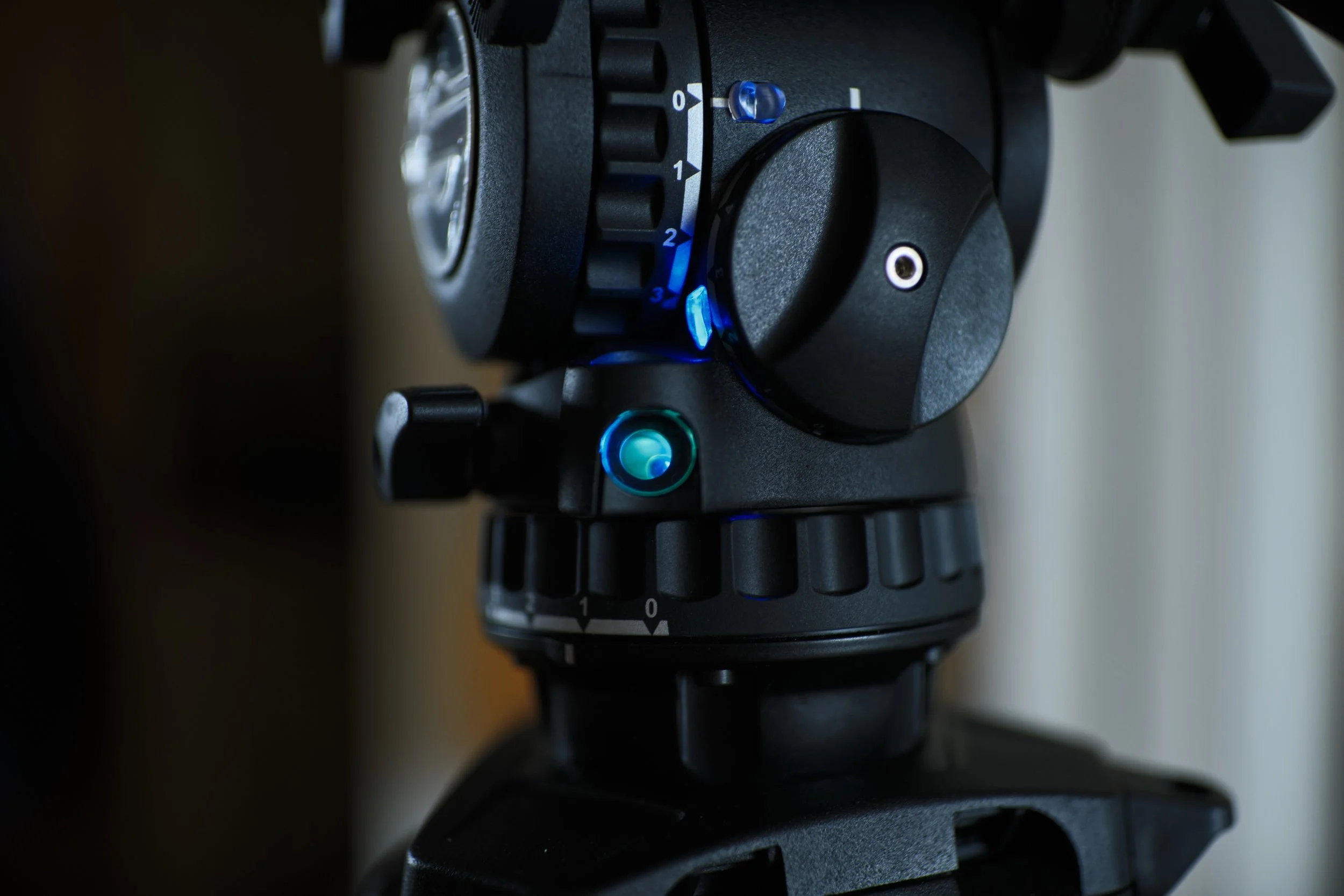
LED illuminated
This head is pretty much as premium as anyone would reasonably need. There are some O’Connor heads and tripods for professional 15kg. rigs but for 90% of folks, this is as good as it gets. The Aktiv6 supports 8kg for 75mm bowl heads and is much lighter while having more features than all the other heads. It’s a true fluid head and has no limit in function. It’s feels pretty overpriced for being completely carbon fiber, but you should be thankful for the lightness on long days, though it will scratch and dent easily.
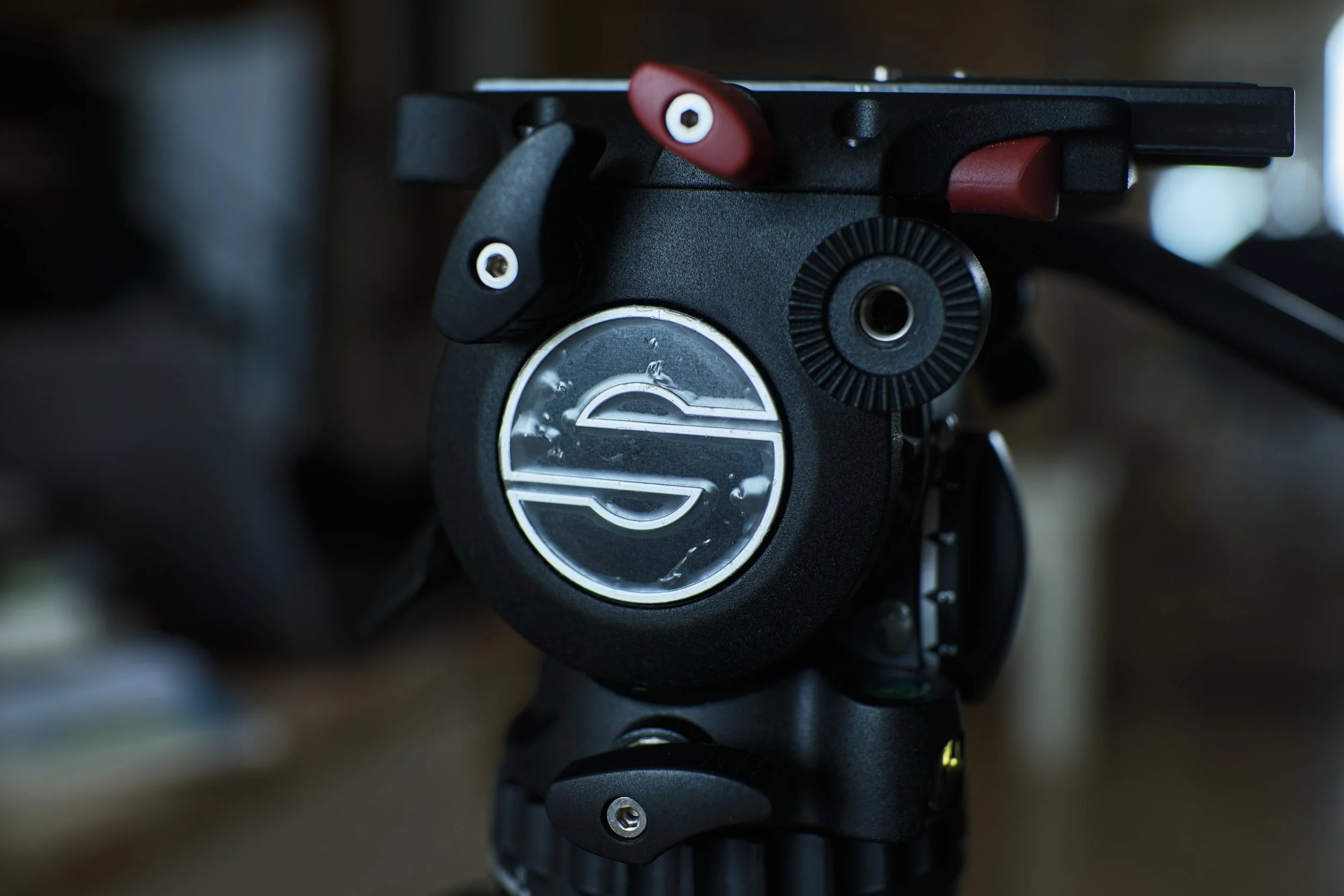
Knobs are easy to turn and lock. On the smaller side.
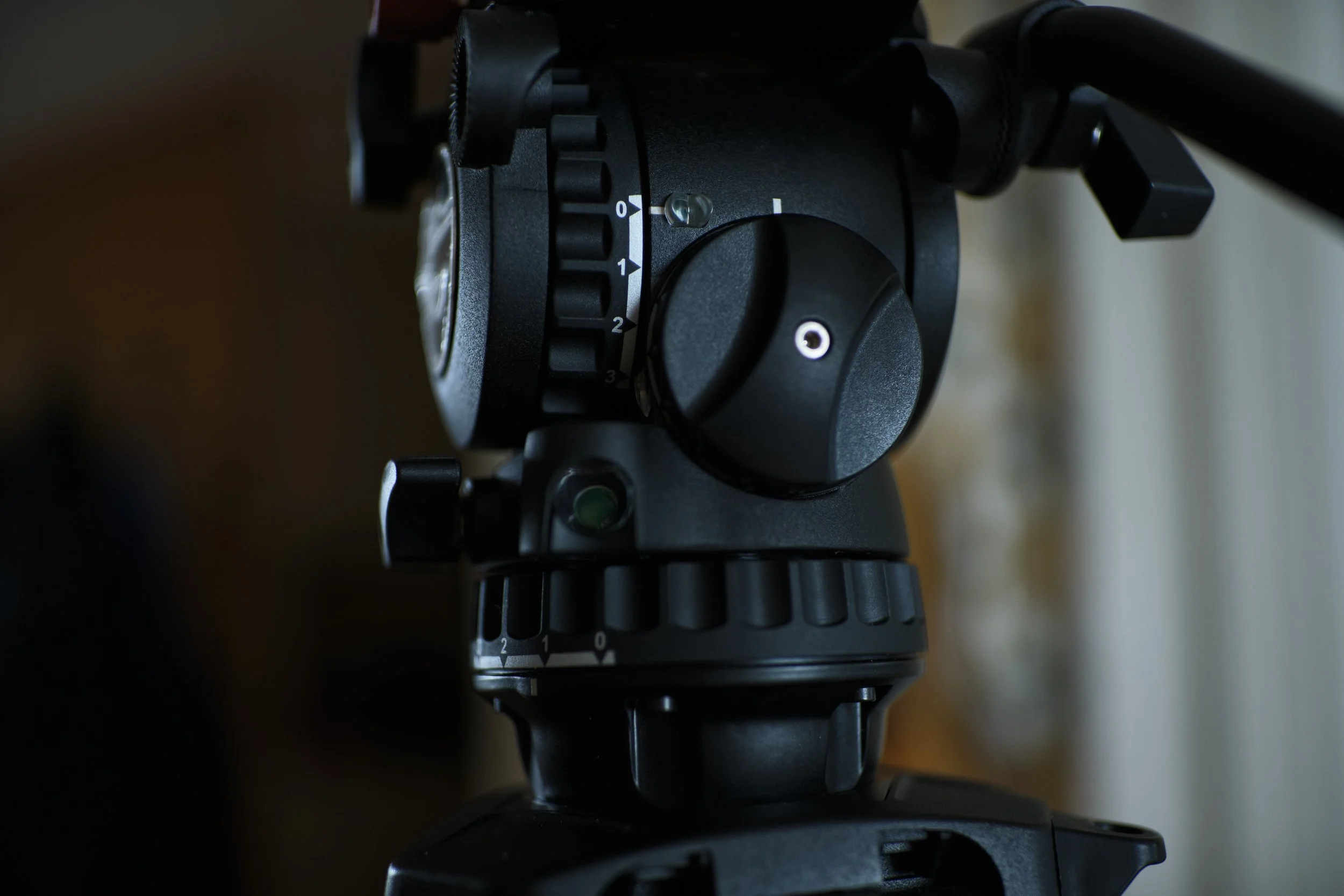
Everything is on the left side. No need to dance around the tripod.
First thing is setup. This is the most difficult installation of any product I’ve ever used, including furniture. The connector stud and adjustment knob require unintuitive and precisely esoteric set up, but after you do it once you don’t have to do it again and it should all makes sense. In order to detach and attach the head, you must lift the lever all the way up. If the stud gets stuck in the head, make sure you tighten the knob all the way, pull the lever as far up as possible and yank. There’s a soft block when you lift tricking you into thinking it’s all the way up when it’s not, which is so you don’t accidentally pull too far and detach when you simply want to adjust. When you adjust the tightness of the head, the lever must be parked on the ‘S’ symbol and should rest at 45 degrees. Pretty precise, but necessary for the smoothest adjustment of any fluid head.
Truly terrifying setting this up the first time.
The connector stud can fall apart because the spring falls off easily.
Just hold it in place through this hole.
Lever to adjust and detach the head.
When the lever is parked on ‘S’, this is where the lever should sit. Higher means you need to loosen the knob. Lower means you need to be tighter.
Where this fluid head separates itself from the competition is its perfect functionality. It’s pretty hard to demonstrate feel through video or pictures. Simply put, every knob works as you imagine it should. The dampening can be 0 or high resistance with incremental levels to fine tune any rig. Other budget heads you have to kind of guess how much dampening and resistance there will be and the counter balance doesn’t actually properly bounce back.
15 precise levels of counterbalance that actually feel responsive.
Tilt dampening.
Pan (horizontal) dampening. 0 allows frictionless spins for days.
It’s a pretty small thing, but the bubble is the main reason I bought this head. I don’t know if it’s oil or something, the bubble here more accurately depicts the level compared to the competition and it’s supremely visible. The small LED illumination is also unimaginably helpful, you just press the glass to turn it on. I can now level at high angles and finally get rid of electronic level on the camera.
Bigger and more visible.
Side bubble is invaluable for higher elevated positions, which is otherwise impossible to see.
Very helpful in the dark.
What you’re paying 3000 USD more on this tripod is the convenience. These luxuries include being lighter, better functionality (which does make a difference) and never making you feel like you’re missing something or desire to upgrade. Well, there are a few complaints. The head requires a twist to secure the plate and the locking system takes a bit of force to push in. It’s something to get used to, but I feel the over security measures sometimes end up being a hassle. The button requires more force to unlock as well, though it’s nice that all of these functions can be performed with one hand on the same side of the camera. Easy to get used to.
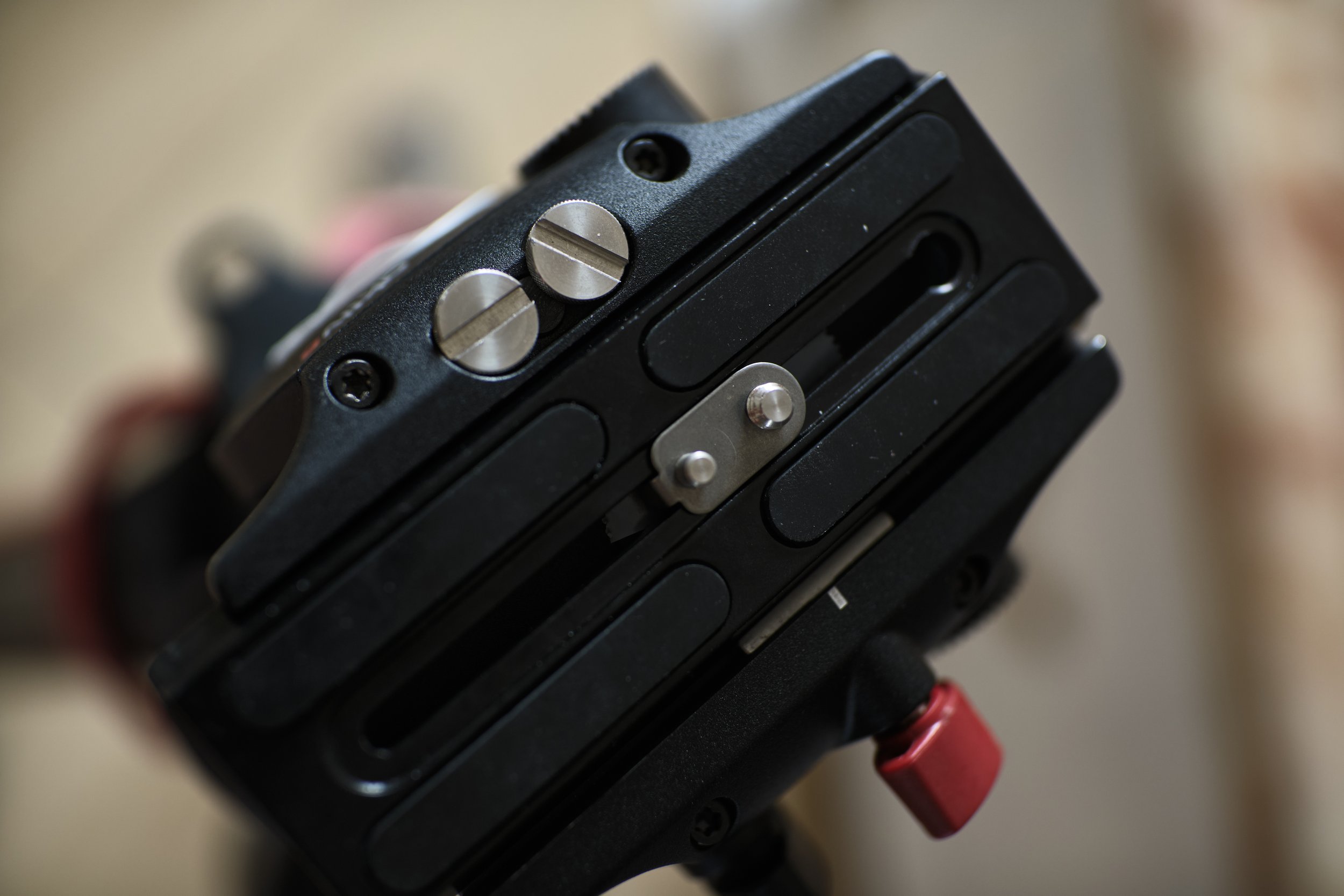
Head has extra screws. This interface is the only weakness of this fluid head.
Push down this lock in order to secure the plate. Can get stuck if you lock it improperly.
This red button releases the lock. Sometimes have to search for this as it’s under the plate. I prefer Sirui.
Handle is mediocre, no adjustment for length.
Sirui SVH15 Fluid Head
If you do macro shot pans, there can be an extremely minor bounce back when you release.
The lock knob for pan is a bit obtrusive but the plate lock is perfect.
Not too many levels of counterbalance, it’s either 1 or 2 for my 4-5kg rig.
This head has several things going for it over the Aktiv6. It has a heavier 15kg payload compared with only 8kg on the Aktiv6, a more convenient latch as opposed to the lever you have to twist to lock the plate on the Aktiv6 and most importantly it’s much cheaper. I’d even go as far as to say it’s more professional with all its metal. You can also detach the head to access a flat 3/8 mounting point so you can attach it to a slider. Detaching and attaching is much better on the Sirui. The Aktiv6 requires another accessory as it doesn’t have this native functionality. If I had abundant cash I’d go for the Aktiv6 because it’s lightweight and has a more convenient pull-up lever to adjust to bowl. The counterbalance on the Aktiv6 is also superior with 15 stops and has more niceties and quality of life improvements like side bubbles with LEDs. However, it’s kind of a pain to set up the head for the first time.
I don’t know if it’s truly a fluid head, but I don’t care. It’s smooth as butter and as professional as you could possibly need.
Simply press the plate on the secure. No need to slide it in. Press this button to release.
Twist to adjust dampening, not the most precise experience. The plate lock is perfect.
What’s bad about the head is that it’s heavier by about 2 pounds. The counter balance is not as impressive in comparison to the fluid head, which functions extremely smoothly. The bubble is not super reliable if you’re OCD precise like I am when it comes to leveling and a side bubble would have been very welcome. If you want to do whip pans, the head unfortunately always has some dampening so you can’t make it spin. But the two handles surprised me. I thought I would just use one, but it makes the experience more pleasurable, like riding a reindeer. And they are adjustable! Ho ho ho!
7 levels of counter balance. Have to return to level for changes to take place. No 0 setting.
Inconsistent results with this bubble, will have to test more.
2nd bubble. I think it should be on the same side as the other bubble.
Recommendations
All in all, I got this combo for about 900 USD for a used Flowtech and 350 USD for the fluid head. Bear in mind I bought in the Chinese market, which is much cheaper. I think this price is much more palatable than the 5000 USD prices for the full Sachler combo. It’s still pretty heavy but not impossible to get used to. If you’re used to the weight of Otus style lenses, you should be fine with this. In any case it’s still lighter compared to other filmmaking tripods. Do you need an Aktiv head? No, not really. There is a difference in precision and quality of life functionality, but the Sirui gets the job done. If you’re a passion filmmaker, then the Aktiv is undoubtedly the better experience. Main consideration is whether you need precise bubbles and fluidity of the Aktiv versus more compatibility and security of the Sirui. Weight difference isn’t very relevant after 5kg. Also if you have a heavy rig, definitely go for the Sirui.
Gone are the nerves of putting $5000+ on a tripod!
Recommendations




A year maxing style and vibes.